
A cancer diagnosis changes things, and changes them very quickly. Patients and their families have to understand complex medical realities, make difficult treatment decisions, and navigate disruptions to work, finances, and family life. Your first oncology appointment is a time when it is difficult to take everything in.
If you are diagnosed with cancer, time is a luxury you feel you no longer have. It can seem as though the diagnosis has set off a ticking clock. You may feel that every moment without treatment is time the cancer is using to grow and spread.
Trust takes time to build, yet cancer demands high-stakes conversations from the very first consultation. You are expected to entrust your health, your body, and your deepest fears to people you may have met only a short time ago.
Where do you start? What do you ask? Whom do you ask? What if you offend someone?
This article provides a roadmap for your first oncology appointment—what to ask, what information to seek, what decisions may need to be made, and what happens next.
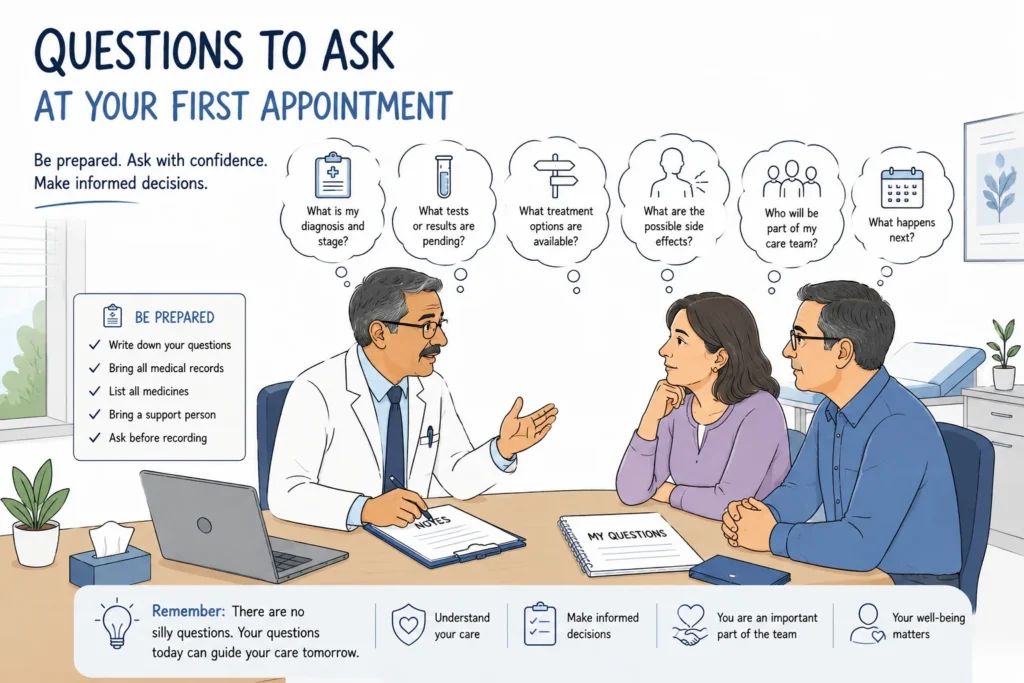
1. Before the Consultation
A little preparation can make your first oncology appointment more useful.
- Write down your questions: Note the concerns that matter most to you before you arrive.
- Bring complete health records: Your doctors will want to know if you are being treated for any other conditions. Carry your full records, even if you think they are unrelated to cancer.
- List all medications: Include prescription drugs, over-the-counter medicines, vitamins, and supplements you are taking.
- Bring support: If possible, bring a family member or friend who can help listen and take notes.
- Ask before recording: If you would like to record the audio of the consultation, ask your doctor first.
2. The Disease
Your first oncology appointment is usually the beginning of a series of conversations rather than a single discussion in which everything is decided. The first priority is understanding your baseline diagnosis. You do not need to remember every medical term, but you should understand the diagnosis your doctors are currently working with.
- What exact type and subtype of cancer do I have, and where did it start?
- What is the stage and grade?
- Has the cancer spread beyond where it started?
- Can you explain my pathology or biopsy report in simple terms?
- Is there anything about my diagnosis we still don’t know—such as pending tests, scans, or molecular reports—and could those results change the treatment plan?
3. The Treatment
It is important to understand why a particular treatment is being recommended. Sometimes the proposed plan—particularly the sequence of therapy, such as giving chemotherapy before surgery—may seem counterintuitive or leave you uncomfortable. Your oncologist will have clear clinical reasons for this sequencing. If something seems unclear or defies common sense, have a frank discussion.
- What do you recommend, and why?
- Are there other treatment options, and what would make you choose one over another?
- Does the order in which treatments are given matter? (Changing the sequence can sometimes significantly affect the chance of cure or outcomes.)
- How and when will we know whether the treatment is working?
- Should I consider a clinical trial?
- What decision do I need to make right now, and what can safely wait until we know more?
- What side effects are common with this treatment, and which ones require contacting the hospital immediately?
- What can I do to prevent or manage common side effects?
- Could this treatment cause any long-term physical limitations or disability (such as nerve numbness, swelling/lymphedema, or changes in how I move, eat, or speak)?
- Are these physical changes likely to be temporary or permanent, and what can we do early on to reduce the risk?
- Will this affect my ability to work or manage daily activities, and will I need help at home?
- Will treatment affect my fertility?
4. The Preparation
- Do I need any baseline evaluations—such as cardiac checks, dental clearances, or fertility preservation—before treatment starts?
- Should I stop, adjust, or continue anything I am currently taking—including prescription medicines, vitamins, supplements, or herbal products?
- Is there anything I should start doing, or avoid, before treatment begins?
- Are there vaccinations or other preventive measures I should consider?
5. The Team
- Who will be leading my care, and who is coordinating it?
- Will my case be discussed by a multidisciplinary team or tumor board? (Cancer care rarely relies on a single approach; the primary modalities—surgery, systemic therapy, and radiation—are best planned jointly by all treating specialists.)
- Who should I contact if I have routine questions or problems between appointments?
6. Logistics
- How often will I need to come in, and how long will each visit take?
- Will treatment be outpatient (day care), or will I need to stay in the hospital?
- Will I need someone to accompany me or drive me home after sessions?
- Can some parts of my treatment, blood tests, or routine monitoring be done closer to home?
- Who on the hospital team assists with insurance paperwork, financial counseling, or logistics?
7. Emergency Care and Support Services
- What emergency number should I call outside clinic hours, including evenings, weekends, and holidays?
- Which symptoms mean I should go straight to the emergency department, and which should I call the oncology clinic about first?
- Can I be connected with a physiotherapist, occupational therapist, or speech therapist early on to help prevent or manage physical limitations?
- Is psychological counseling or psycho-oncology support available for me or my family?
- Are there support groups for patients or caregivers?
- Can I meet with a clinical dietitian or palliative/supportive-care specialist if needed?
- Who can assist if treatment affects my ability to manage work, finances, or family responsibilities?
Your Checklist Before You Leave
- [ ] What my exact diagnosis is (type, subtype, and stage).
- [ ] What is known about my cancer and which test results are still pending.
- [ ] What treatment is recommended for me and the reasons behind it.
- [ ] What physical limitations, side effects, or long-term disabilities I might expect, and what can be done to manage them.
- [ ] What decision I need to make right now, and what can safely wait.
- [ ] What I need to do or prepare before my treatment begins.
- [ ] Which symptoms require me to seek urgent medical help, and what emergency numbers to call.
- [ ] Who I should contact if I have questions, concerns, or side effects between visits.
- [ ] When and where my next appointment will be.
(If something is unclear, ask your doctor to explain it again. It is completely reasonable to ask for a medical term or test result to be explained in simpler language.)
A Final Practical Point
You do not need to ask every question in this article. Choose the questions that are most relevant to your situation and the decisions you are facing now.
The aim of the first consultation is not to understand every aspect of cancer. It is to leave knowing what has been established, what information is still needed, what decision comes next, and who will guide you through it.
That understanding can make the next steps in cancer care clearer and easier to manage.